Related Articles
- Cultural Collisions: How Colonialism and Conquest Transformed Games and Their Rules Across Continents
- The Eccentric Anomalies of Game Etiquette: Odd House Rules That Defied Generations
- Unveiling the Unconventional: The Role of Secret Societies in Shaping Game Regulations Across Time
- Revisiting the Cultural Phenomenon: How Iconic Championships Influenced Fashion Trends on and off the Field
- Revisiting the Aftermath: How Championship Wins Shape Community Identity and Local Economies
- The Role of Unexpected Weather Events in Shaping Championship Outcomes: A Tidal Wave of Influence
Unraveling Controversies: The Scandals That Altered the Public's View of Historic Sporting Events
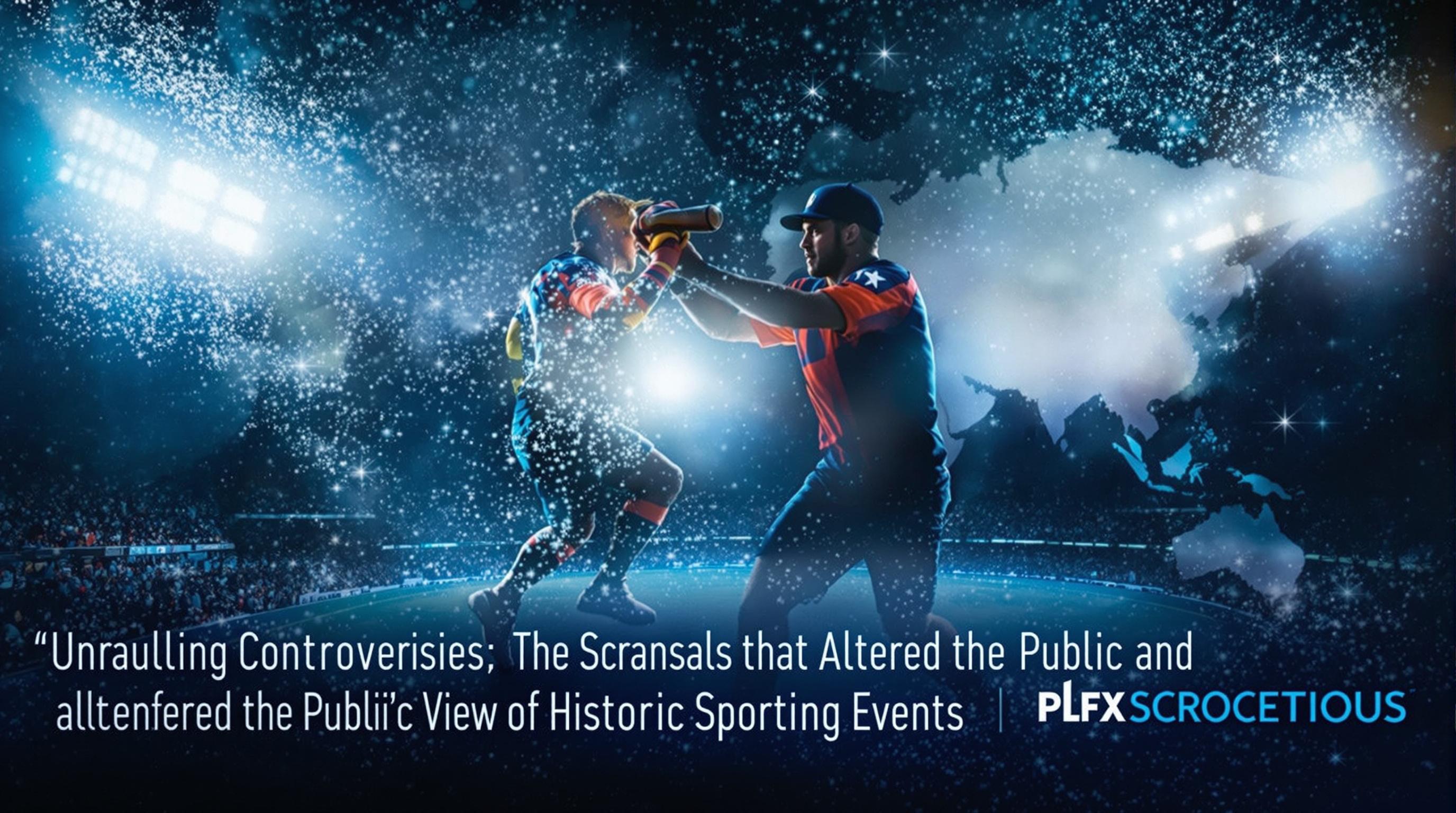
Unraveling Controversies: The Scandals That Altered the Public's View of Historic Sporting Events
The world of sports is often viewed through a lens of glory, achievement, and dedication; however, scandal has a way of altering perceptions dramatically. This article delves into various historic sporting events tainted by controversy, exploring how these moments shifted public opinion and the broader cultural conversations surrounding athletics.
The Fall of Lance Armstrong: From Hero to Villain
Once hailed as a beacon of hope for cancer survivors and athletes alike, Lance Armstrong’s fall from grace was nothing short of dramatic. The seven-time Tour de France winner not only captivated fans with his remarkable comeback but also leveraged his story to raise millions for cancer research. Yet, when evidence of systematic doping emerged, it shattered the façade that Armstrong had so masterfully crafted. In 2012, the United States Anti-Doping Agency (USADA) issued a report detailing how Armstrong had been at the center of the most sophisticated doping scheme in sports history.
Imagine watching a hero slowly morph into a cautionary tale. According to a 2013 Gallup poll, Armstrong’s favorability rating plummeted from 88% to just 42% after the doping allegations became public. This shocking transformation illustrates how the public's admiration was swiftly replaced with feelings of betrayal and disillusionment.
The Black Sox Scandal: A Game Fixing Fiasco
Step back to 1919, the year of the infamous Black Sox scandal that rocked Major League Baseball. Eight players from the Chicago White Sox were accused of conspiring to fix the World Series against the Cincinnati Reds. The fallout was monumental—these players, including star slugger Shoeless Joe Jackson, faced not just bans but endured reputational devastation that endured for generations. The aftermath of this scandal resulted in the establishment of the commissioner's office in baseball, aimed at restoring the integrity of the game.
In the words of baseball’s first commissioner, Kenesaw Mountain Landis, “There is no room in baseball for anyone who thinks he can get away with anything.” This phrase echoed through the media, changing the public’s view of organized sports as it fueled a sense of distrust among fans. The scandal demonstrated how easily the veneer of integrity could be scratched, something that still plagues discussions surrounding sports to this day.
Deflategate: Tom Brady's Controversy
Fast forward to 2015, when NFL quarterback Tom Brady found himself embroiled in a scandal that would eventually be labeled “Deflategate.” During the AFC Championship game, the New England Patriots were accused of using under-inflated footballs, which would make them easier to grip for the quarterback. Though there was no direct evidence implicating Brady, the NFL’s investigation led to his suspension for the first four games of the following season.
What began as a routine investigation spiraled into a media frenzy. Memes flooded social media, with casual sports fans and die-hard advocates alike debating Brady's legacy in real-time. A poll by CNN found that around 51% of Americans thought Brady should have been suspended, while only 38% believed it was an unnecessary punishment. This division highlighted how modern athletes are not simply public figures; they are polarizing symbols that spur passionate debates.
Racial Reckoning in Sports: The World Series of '96
Racism in sports isn't confined to locker rooms; it spills over into public consciousness and alters the narratives of athletic events entirely. The 1996 World Series faced scrutiny not for the game itself but for the racial inequalities exhibited in and around the sport. During this series, the Atlanta Braves and New York Yankees faced off, but what caught the public’s attention was the inclusion—and then ignoring—of Black players and coaches in discussions about strategy.
Consider the fact that while baseball is often called America’s pastime, discussions around race have lingered in its shadows since the days of segregation. Critics argued that baseball's lack of representation among its management and coaching stances illustrated a broader societal issue, which prompted protests and calls for transformation within professional sports leagues. This scandal illuminated the persistent racial dynamics in athletics, altering how baseball is perceived by fans and analysts alike.
The Steroid Era in Major League Baseball
To discuss controversies in sports is to discuss the Steroid Era—the clandestine period in Major League Baseball that led to countless debates, resignations, and tarnished legacies. During the late 1990s and early 2000s, stars like Barry Bonds, Roger Clemens, and Sammy Sosa became household names; however, their acclaim was overshadowed by accusations of performance-enhancing drug use.
As these scandals unfolded, Major League Baseball saw a steep increase in home runs, leading fans to question the integrity of the game. The Congressional hearings in 2005, where players like Mark McGwire and Rafael Palmeiro were summoned, were nothing short of dramatic theater, further exacerbating the situation. A survey by ESPN in 2007 revealed that nearly 80% of Americans believed performance-enhancing drugs were widely used in baseball. This widespread belief challenged the authenticity of even the most impressive feats and, as a result, deepened the rift between athletes and fans.
Storytime: The 1980s and the "American Hero" Image
Once upon a time in the vibrant 1980s, athletes were perceived as American heroes. The thrill of watching legends like Magic Johnson and Larry Bird face off in the NBA Finals painted a picture of sportsmanship and friendly rivalry. However, behind the glamorous spotlight lay a dark side—crack cocaine seeped through professional sports, leading to a series of scandals involving high-profile players.
None was more jarring than the NBA's own investigations that exposed drug use among players who had previously been idolized. Not only did this scandal affect players like Chris Washburn, who was banned from the league, but it also marked a shift in societal views about the “innocence” of sports. The glorified image of heroes began to fade, replaced by a more complicated understanding of the pressures faced by athletes. Today, discussions surrounding mental health in sports owe much of their origin to this era.
Conclusion: The Complex Legacy of Scandal in Sports
Scandals are sometimes synonymous with the highest levels of competition; they challenge the core values of integrity in sports. Every controversy echoes through the years, morphing public opinion and stipulating how each generation perceives its heroes. From the Black Sox's betrayal to the ongoing dialogues around Josh Gordon's struggles with substance abuse, these events teach us valuable lessons about accountability and the human experience.
As fans, we must navigate this intertwined web of victory and controversy, bearing witness to how scandals shape the history of sports. In the end, these tales of triumph intermixed with scandal serve as reminders of the complexities within the athletic landscape, transcending mere games to tell stories about who we are and who we aspire to be.
Read More